
Which Spots in New Orleans Does AI Love the Best?
Wondering why certain businesses dominate when you ask ChatGPT for recommendations? We got curious too.
As a New Orleans-based digital marketing agency, we’re always interested in what makes certain brands stand out, especially in our own city. So we started mining for data. We analyzed hundreds of ChatGPT responses to various requests for recommendations of hotels, restaurants, and attractions in New Orleans, to figure out which local spots are the most trusted recommendations by AI—and why.
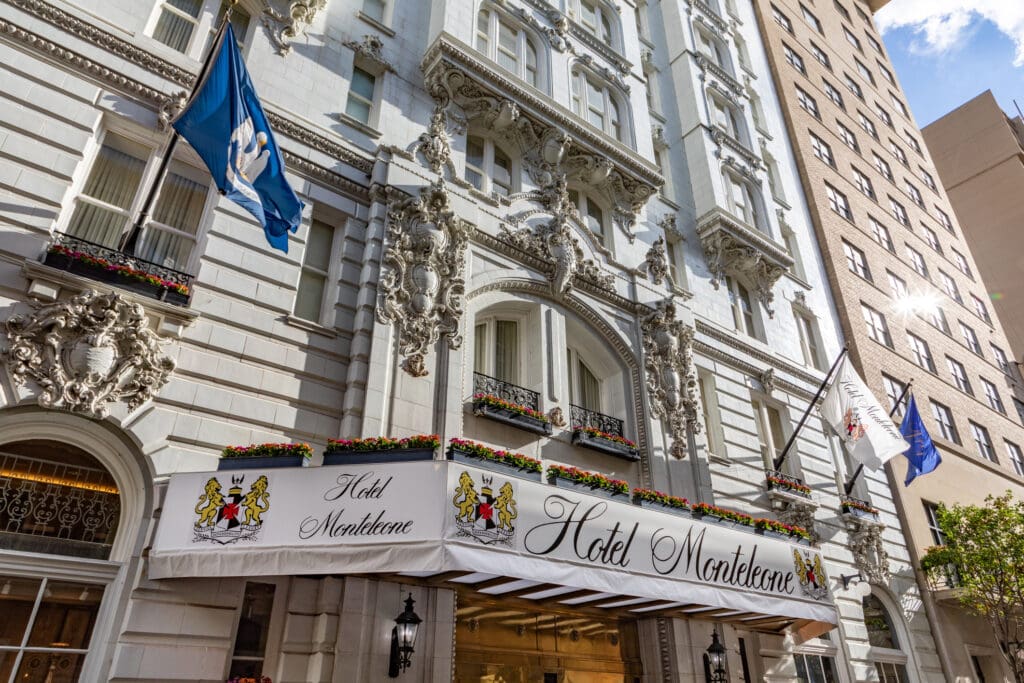
Hotels: The Favorites
Top 10 Hotels by ChatGPT Mention Rate
Top 10 Sources Shaping Attractions Recommendations
What Makes Hotels AI-Friendly
Our winners share key traits: strong presence in premium travel publications, distinctive features that make them quotable (Carousel Bar, anyone?), consistent coverage across multiple sources, and unique histories that create compelling narratives.
AI Fail
Recommending Ghost Hotels
The 3rd and the 10th most recommended hotels on this list no longer exist – at least not by those names. A while back, Maison de la Luz and Ace Hotel New Orleans were both renamed and rebranded.
Why Did This Happen?
AI models are trained on massive datasets that include outdated content. Their “intelligence” is built on information available online, but it doesn’t always check that information’s currency well. Think about it—there are thousands of travel blogs, review sites, and listicles floating around from 2018-2023 that still rave about the Ace Hotel NOLA. When ChatGPT or Claude sees the same hotel mentioned across hundreds of sources, it assumes that hotel is still relevant. It’s like asking someone for restaurant recommendations based on a stack of old magazines.
Google Search typically catches these changes within a few months, especially if the hotel updates their Google Business Profile. In the AI Overviews, though, things get messy. Currently, when you search for information on the Ace Hotel New Orleans on Google, most of the top results correct to “The Barnett” (it’s rebrand name). But the AI overview still discusses the Ace Hotel New Orleans as if nothing has changed.
What Can Brands Do to Correct This?
First, you should claim your narrative everywhere. If your business rebrands, updating the website isn’t enough—you need to hit TripAdvisor, Yelp, Google, booking sites, even Wikipedia if they’re on there. Create content that explicitly says “formerly known as [old name]” to help AI models connect the dots. Blog posts, press releases, whatever it takes.
Then you have to stay on top of it. Setting up Google Alerts for the old brand name is helpful, so if it pops up anywhere, like say a travel blog, you can reach out with friendly corrections. The brands that actively manage their digital footprint—rather than hoping AI will figure it out—are the ones that won’t get lost in the digital shuffle.
Restaurants: Where AI Sends Hungry Visitors
Top 10 Restaurants by AI Mention Rate
Top 10 Sources Shaping Restaurant Recommendations
Key Sources to Note
- NOLA Eater – The well-known national site employs local writers and editors for their New Orleans branch, making it a comprehensive authority on the city’s food scene.
- Wikipedia – Essential informational hub.
- NewOrleans.com – The locally run tourism and hospitality organization New Orleans & Co. is a proven authority.
- Reddit – Authentic user-generated content is prioritized again and again.
- Restaurant Websites – Turning to the business’ own sites.
What Makes Restaurants AI-Friendly
The winning restaurants balance critical acclaim with popular appeal. Many in the top 10 are all-time classics, like Commander’s Palace, Dooky Chase, and Antoines–and they’ve got the huge volume of media and reviews to prove it. Others, like DakarNOLA, Pêche, and Saint-Germain are more recent-comers, but guests have only good things to say. They appear frequently in local food media (especially NOLA Eater) and maintain strong web presences.
AI Opportunity
Your Site, Your Narrative
ChatGPT referenced individual restaurant websites as sources more frequently in this category than any other. The pattern reveals an opportunity. When your website features rich, detailed content about your services, your story, and what makes you unique, AI has great material to work with. It’s your chance to shape the narrative.
While third-party reviews and opinions certainly matter, having well-crafted content on your own site ensures AI tools have accurate, up-to-date information straight from the source. Investing in quality website content isn’t only important for traditional SEO anymore, it’s also becoming essential for how AI understands and recommends your business.
Attractions: The Must-See List
Top 10 Attractions by AI Mention Rate
Top 10 Sources Shaping Attractions Recommendations
Key Sources Shaping Attraction Recommendations
- Time Out — Well-known glossy corporate media source.
- NewOrleans.com — The locally run New Orleans & Co. shows up again as an authority.
- US News Travel — US News & World Report’s Travel section is looked to for their features.
- InsideNola.org — Site full of generic AI-written articles gets the attention of robot-brethren.
- USA Today 10 Best — AI lost a listicle, and USA Today’s Top 10 travel site delivers just that.
- Condé Nast Traveler — Cracks the top 10 again.
What Makes Attractions AI-Friendly
Unlike hotels where luxury dominated, AI’s favorite attractions span different budgets. What they share is universal appeal and clear identity, consistent media coverage in national publications, and an abundance of strong reviews. Many also have rich, SEO-friendly website content.
ChatGPT vs.TripAdvisor
TripAdvisor has been the main ad-channel for tourist attractions over the last two decades, and it remains a well-regarded source among some audiences. Interestingly, ChatGPT did not use TripAdvisor as a top source for its attractions recommendations, while it did for restaurants and hotels.
Looking at top New Orleans attractions recommendations from TripAdvisor vs. ChatGPT, there’s definitely some overlap, but the differences are interesting.
Both AI and TripAdvisor agree on the heavy hitters: The National WWII Museum takes the top spot on both lists, and you’ll find Preservation Hall, Mardi Gras World, City Park, and Jackson Square on both. But in our tests, AI seemed to favor specific, ticketed attractions more than TripAdvisor did. Audubon Aquarium, NOMA, Audubon Zoo, JAMNOLA, and the Historic Voodoo Museum all made AI’s top 10, but those are all much lower on TripAdvisor’s list. Meanwhile, TripAdvisor favors the inclusion of entire neighborhoods like the French Quarter, Frenchmen Street, and the Garden District—plus more architectural landmarks like St. Louis Cemetery No. 1 and St. Louis Cathedral.
JAMNOLA, which opened in 2020, cracked AI’s top 10 at nearly 27% mention rate. That’s a masterclass in SEO and content marketing for a relatively new attraction.
AI appears to be pulling from content that mentions specific venue names repeatedly, while TripAdvisor’s crowdsourced approach captures how actual visitors experience the city—by neighborhood and area, not just individual attractions.
AI Fail
The love for the listicle
One thing that stands out in the top sources is Insider Fandom, a website about “movies, TV shows, gaming” that should not be looked to as an authoritative source for anything New Orleans nor travel. ChatGPT was drawn to two articles in their archives–a pair of generic AI-written listicles about the Top 50 New Orleans tourist attractions.
Touropia and Attractions of America are also generic listicle sites, with little to no information about who “writes” their content. InsideNola.org, though focused on New Orleans, is also composed entirely of AI-generated content, with no information about authors.
AI is attracted to tightly-organized “Best Of” and “Top [#]” articles, despite how generic they may be. Though USA Today is a more respectable source, ChatGPT cited their 10 Best site, a travel site focused on ranking.
The Big Picture: Who’s Really Influencing AI Recommendations
After analyzing hundreds of AI responses across hotels, restaurants, and attractions, here are some patterns about which sources carry the most weight.
The Power Players Across All Categories
Our data revealed the kinds of sources AI systems are most influenced by:
User-Generated Content Kings: Reviews & Forums
- TripAdvisor appeared in 44.8% of hotel searches
- Booking.com cited in 37.3% of hotel searches
- Reddit threads cited in 27.9% of restaurant searches and 22.4% of hotel searches
Editorial Authorities: Reputable, Large Publications
- Eater NOLA dominated restaurant recommendations (54.1% of searches)
- Time Out led attraction recommendations (cited in a whopping 95.6% of searches)
- Condé Nast Traveler (cited in 41.8% of hotel searches and was a top 10 source for attractions)
- Travel + Leisure maintains influence (35.8% of hotel searches)
- US News Travel (appears in 52.9% of attraction searches)
- Wikipedia serves as a neutral information backbone (28.4% for hotels, 29.5% for restaurants)
Local Voices Matter:
- NewOrleans.com absolutely dominates attraction searches (92.65%) and maintains strong presence in restaurants (37.7%)
- Eater NOLA’s local writers and editors make the reputation of the site solid, with feet-on-the-ground expertise
- Local food blogs and lifestyle influencer sites frequently cited

What This Tells Us About AI Search
This concentration of influence reveals some critical insights. AI systems are clearly prioritizing:
The businesses being recommended most by AI aren’t necessarily the biggest or most expensive – they’re the ones that maintain consistent presence across these trusted sources while offering distinctive experiences easily narrativized in editorial coverage and user reviews.
From Invisible to Unmissable
Ready to get your business on AI’s radar? Whatever your business or organization is, here’s what our data says will work.
1. Cultivate Genuine Reviews & Social Media Love
Every top spot maintains strong profiles across:
- TripAdvisor
- Google Reviews
Set up systems to encourage reviews after every visit. Manage the conversation around your business on Reddit. AI trusts attractions that real people consistently recommend.
2. Create AI-Friendly Content
Our analysis shows AI loves specific types of content:
- FAQs – Answer every possible visitor question
- Comparison Pages – “How We’re Different from XYZ”
- Visitor Guides – Detailed, practical information
- Historical Context – AI loves a good, relatable story
3. Fix Your Identity Crisis
If AI can’t figure out what you are in one sentence, you’ve got work to do. The National WWII Museum doesn’t need explanation. Can you say the same?

4. Structure Your Data
AI likes to read simple, well-structured data, hence its listicle obsession. If you create information about your business that is optimized for AI, the chances that it will recommend you will skyrocket.
Why This Matters
More and more people are using AI tools as their first stop for travel recommendations, despite its shortcomings. According to a recent report from Money Lion, 70 percent of Americans that responded to their survey are either already using, planning to use, or open to using AI tools for travel arrangements. In the same study, 71 percent thought that using AI to research and plan travel would be easier than planning on their own.
And ChatGPT is the most commonly used tool. A recent study conducted by Sainsbury Bank in the UK found that of the adults they surveyed who use AI for travel planning, 45% of them turn to ChatGPT.
But, when someone asks “What’s the best hotel in New Orleans?” to their AI assistant of choice, only a handful of names consistently make the cut. If you’re in hospitality, or running any kind of business where customers discover you online, understanding how AI search results work is essential for your marketing strategy.
Note: These results were gathered from differently-worded search queries, performed on ChatGPT in New Orleans and New York in July 2025. We chose ChatGPT because of its popularity. Google AI Overview and Perplexity work may show similar results, but they have also been shown to have different citation patterns.
