Your Guide to ChatGPT Ads (For When They’re Actually Released)
Yes, we know it’s not released yet, but the next big platform in 2026 for online advertisers is going to be ChatGPT ads. In less than four years since its release in November, 2022, ChatGPT has changed how consumers search, consider, and purchase products. I remember back in 2012 when I founded Online Optimism, feeling the opportunity that first-movers have in markets. Back then, it was seeing what Facebook buying Instagram would turn into. Now, it’s understanding how ChatGPT will change shopping behavior forever.
Ads are an inevitable and exciting opportunity for brands to pay to be where eyeballs now are. And where Attention is All You Need, OpenAI has everyone’s attention.
While the platform isn’t open to the public yet, it’s never too early to prepare your company (and your skillset) for the future.
Here’s everything you need to know about ChatGPT ads: what’s confirmed, what I expect, and how to prepare your brand for this new frontier.

800M+
Weekly Active Users
2.5B
Daily Prompts Processed
53%
Users Aged 18–34
81%
AI Chatbot Market Share
Sources: OpenAI, Backlinko, DemandSage
What We Actually Know About ChatGPT Ads
Let me be clear about what’s confirmed versus what’s speculation. This distinction matters because the internet is already full of hot takes masquerading as fact.
Confirmed by OpenAI
The Timeline: Testing begins “in the coming weeks” (as of January 16, 2026) for logged-in adults in the U.S. on the free and ChatGPT Go tiers.
The Format: According to OpenAI’s January 16th announcement, the initial test will show ads “at the bottom of answers in ChatGPT when there’s a relevant sponsored product or service based on your current conversation.”
The Guardrails:
- No ads for users under 18 (or those predicted to be under 18)
- No ads near “sensitive or regulated topics like health, mental health or politics”
- Ads will be “clearly labeled and separated from the organic answer”
- Users can dismiss ads and provide feedback on why
Who’s Exempt: Pro ($200/month), Business, and Enterprise subscriptions won’t include ads.
OpenAI’s Four Advertising Principles
Fidji Simo, OpenAI’s CEO of Applications, emphasized on X/Twitter: “Ads will not influence the answers ChatGPT gives you.”
The Business Case: Why Ads Now?
OpenAI’s CFO Sarah Friar has been candid about the financial context driving this decision. In a January 17, 2026 post, she laid out the revenue trajectory:
2023
$2B
Annual Revenue
2024
$6B
3x Growth
2025
$20B+
10x from 2023
2026 Target
$29.4B
Projected
2029
$25B
From Ads Alone
But the spending is equally significant. Reports suggest $8.5 billion annually with a projected $5 billion loss over the next 12 months. OpenAI has committed to an estimated $1.4 trillion in AI infrastructure spending over the next decade.
The Bottom Line: Ads aren’t OpenAI’s primary strategy (Friar called them part of a “diverse revenue model”), but they’re part of the math that makes free access sustainable. With only ~5% of users on paid plans, advertising offers a scalable path to monetize the other 95%.
What Will ChatGPT Ads Actually Look Like?
OpenAI published mockups with their announcement, and they’re understated—a conversation about Mexican dinner party recipes shows a sponsored hot sauce recommendation appearing after the organic response. Clearly labeled. Separated from the answer. Small.
The Current Test Format
- Text-based sponsored recommendations
- Positioned after the organic response
- Contextual targeting based on the current conversation
- Click-to-dismiss functionality with feedback options
What I Expect to Come Next
OpenAI showed a second mockup hinting at future capabilities: a conversation about traveling to Santa Fe, New Mexico, with a sponsored listing for “Pueblo & Pine” desert cottages—and a follow-up chat view where users can directly ask questions about the advertised product.
The Interesting Part: They wrote: “Soon you might see an ad and be able to directly ask the questions you need to make a purchase decision.”
Think about that. Instead of clicking through to a landing page and reading marketing copy, you could ask the ad itself:
- “What’s your cancellation policy?”
- “Do you allow pets?”
- “How far are you from the downtown area?”
This is conversational commerce, and it’s different from anything Google or Meta currently offers, though Meta’s Advantage+ ads show that Zuckerberg isn’t scared to add more AI features into their ad platform, and same with Alphabet/Google as anyone who’s been dealing with Performance Max campaigns is aware of.
Format Possibilities Beyond the Initial Test
Based on OpenAI’s language about ads being “native to the experience” and my experience with how ad platforms evolve, here’s what I’d expect:
Search-style carousel ads: Leaks from as early as November, 2025, according to Mashable, indicated from ChatGPT’s Android beta references to “ads feature,” “search ad,” and “search ads carousel.” For local and ecommerce queries, expect something similar to Google’s shopping carousel.
Sponsored sessions: OpenAI already has a token-based economy. I wouldn’t be surprised if users could watch or interact with an ad to unlock additional tokens or premium features. They’ll likely be gamified, though, as the general public isn’t going to understand what a token is – but they would understand what “click this ad and get 3 more ChatGPT conversations per day equals.
Conversational display ads: Where the creative isn’t just a static image but an interactive element you can chat with—powered by advertiser-provided knowledge bases.
How Much Will ChatGPT Ads Cost?
Nobody knows yet. OpenAI hasn’t announced pricing, and I haven’t found any credible leaks on this front.

The Team OpenAI Built
They’ve hired advertising executives from Google, Meta, Instagram, and X. Their career page includes posts for jobs like “Growth Paid Marketing Platform Engineer” whose responsibilities include “developing campaign management tools” and “integrating with major ad platforms.”
The Infrastructure Is Being Built From Scratch
The Growth Paid Marketing Platform Engineer role reveals that OpenAI is building foundational MarTech infrastructure in-house rather than licensing existing solutions. The job description explicitly mentions “developing campaign management tools, integrating with major ad platforms, building real-time attribution and reporting pipelines, and enabling experimentation frameworks.” While this role is technically about OpenAI’s own marketing spend, the same infrastructure—attribution pipelines, campaign management, A/B testing frameworks—forms the backbone of any advertiser-facing platform. The fact that they’re hiring engineers at $160K–$385K to build this from “0 → 1” suggests a self-service advertising platform is likely 18-24 months out, following the pattern of the initial beta period.
Enterprise Relationships Will Drive Early Ad Inventory
The Head of Sales Development and Head of Sales Industries roles, both commanding $350K–$500K base salaries, signal that OpenAI is investing heavily in building direct relationships with the world’s largest enterprises. The Sales Industries role specifically mentions cultivating “C-suite relationships with the world’s most influential enterprises, including CEOs, CIOs, CTOs, CMOs, and Chief Risk Officers.” These aren’t just API customers—they’re future advertising partners. When ChatGPT advertising scales beyond the initial test phase, OpenAI will have an existing pipeline of enterprise contacts who already trust the platform and understand its capabilities. The CMO mention is particularly telling; that’s not typically who you’re selling API access to.
Vertical Specialization Suggests Category-Specific Ad Products
The emphasis on industry verticals—Financial Services, Life Sciences, and Retail appear repeatedly across all three job postings—indicates that ChatGPT advertising will likely develop category-specific ad products and targeting capabilities. The Head of Sales Industries role specifically requires someone who can “develop industry-specific narratives, playbooks, and thought leadership that translates frontier AI capabilities into concrete business outcomes for each vertical.” This suggests OpenAI recognizes that a one-size-fits-all advertising product won’t work; a Retail brand asking ChatGPT for product recommendations needs different ad formats and compliance guardrails than a Financial Services firm appearing in investment research conversations.
The Sales Motion Will Start High-Touch, Not Self-Service
The “Head of Sales Development” role is explicitly described as a “0 → 1 build” focused on enterprise accounts, not SMB self-service. This confirms what most industry watchers expected: early ChatGPT advertising will be managed through direct sales relationships, similar to how Twitter, LinkedIn, and TikTok launched their ad platforms. The job descriptions emphasize “multi-year enterprise agreements and platform-level partnerships” rather than credit card sign-ups. For smaller advertisers hoping to test ChatGPT ads immediately, this means waiting—likely until 2027–2028 based on typical platform maturation timelines—for self-service access.
OpenAI Is Building a Full GTM Organization, Not Just an Ad Product
The combined investment across these three roles—potentially $1M+ in base salary alone, plus equity—shows OpenAI isn’t treating advertising as a side project. They’re building a complete go-to-market organization that spans demand generation (Sales Development), industry expertise (Sales Industries), and technical infrastructure (Platform Engineering). The Sales Industries role reports directly to executive leadership and requires someone who can “represent OpenAI externally at marquee industry events, executive forums, and regulatory engagements.” This is the organizational structure of a company preparing to compete seriously in advertising, not one running a small experiment. The regulatory engagement mention is also notable given the FTC scrutiny and state AI laws that will govern how ChatGPT advertising operates.
These aren’t people who are going to reinvent the wheel. They’re going to build something familiar to advertisers.
What “Familiar” Probably Means
My Educated Guess: Early adopters will likely see lower costs due to less competition and limited inventory. This is exactly what happened with early TikTok ads, early Snap ads, and early Reddit ads. The window doesn’t stay open long.
Who Should Advertise on ChatGPT?
Here’s where I’ll put on my strategist hat.
The Obvious Matches
The Less Obvious Opportunities
Early movers in any category: Competition will be low at launch. That means lower costs and more visibility per dollar spent. We saw this with Reddit marketing (something we’ve invested heavily in at Online Optimism), and I expect the same dynamic here.
B2B companies: ChatGPT is already a research tool for business decisions. When someone asks “what project management tool should I use for a team of 15,” that’s a commercial query. Being there with a sponsored answer could be valuable. OpenAI’s own research shows that 30% of consumer usage is work-related.
Brands that benefit from explanation: If your product requires education—complex financial products, B2B software, technical services—the ability for users to ask follow-up questions about your ad is genuinely novel.
Who Should Probably Wait
Brands in restricted categories: Health, mental health, and political topics are off-limits for now. If you’re in healthcare marketing (we do a lot of this at Online Optimism), you’ll need to see how the restrictions shake out in practice.
Pure awareness plays: ChatGPT isn’t (yet) a place to build brand affinity through repeated exposure. Users come with a task and leave when it’s done. If you’re running brand campaigns without clear conversion goals, this probably isn’t your platform—at least not at launch.
How ChatGPT Ads Differ From Google and Meta
I’ve been running digital ad campaigns since 2012. The ChatGPT format is different enough that it’s worth walking through the distinctions.
Google Ads
Targeting: Keyword bidding
User Intent: Explicit (“buy running shoes”)
Interaction: Click ? Landing page
Session Time: ~1–2 minutes
Meta Ads
Targeting: Audience building (demographics, behaviors)
User Intent: Latent (creating demand)
Interaction: Click ? LP or in-feed engagement
Session Time: Scroll-based, variable
ChatGPT Ads
Targeting: Contextual conversation matching
User Intent: Conversational & evolving
Interaction: Click ? LP or continue conversation
Session Time: ~13 minutes average
Key Insight: According to industry analysis, the conversion rate for referrals within an AI conversation is reportedly 23 times higher than traditional search. This is because the AI “pre-qualifies” the user through a research journey before a recommendation is made.
The Bigger Picture: AI Advertising Competition
OpenAI isn’t the only player making moves. Here’s what else is happening in the AI advertising space:
Google Gemini: In December 2025, Adweek reported that Google informed advertisers of plans to bring ads to Gemini by 2026—though Google’s VP Dan Taylor publicly disputed the claims. Regardless, Google already shows ads in AI Overviews and AI Mode, so chatbot monetization seems inevitable. Gemini has 650 million monthly active users.
Meta AI: In October 2025, Meta announced it would begin using AI chatbot interactions on Facebook, Instagram, and WhatsApp to inform ad targeting and personalization—a move that prompted 36 privacy advocacy groups to urge the FTC to intervene.
Microsoft Copilot: Already integrated with Bing’s advertising infrastructure, offering ad opportunities within AI-enhanced search results.
What This Means for Marketers: AI advertising is becoming a cross-platform opportunity. Brands that develop conversational ad strategies now will have transferable skills as these platforms mature.
What About Organic Visibility on ChatGPT?
Here’s the part where I have to mention that ads aren’t the only way to show up in ChatGPT.
At Online Optimism, we’ve been working on Answer Engine Optimization (AEO) for a while now—making sure our clients’ content gets cited and recommended in AI-generated answers. And it works. ChatGPT already mentions brands and cites sources. Users can click through to learn more, read content, and convert.
If you’re already ranking well in traditional search and producing genuinely helpful, expert content, you’re likely getting some ChatGPT visibility for free. The organic game isn’t going away just because ads are coming.
My Take: Organic and paid will work together here the same way they do on Google. You want to be visible in both places. Being helpful, specific, and authoritative works for both organic visibility and (I’d bet) ad quality scores.
How to Prepare Right Now
Ads aren’t live yet. But there are things you can do today:
Regulatory Landscape & Privacy Considerations
AI advertising is attracting significant regulatory attention. Here’s what advertisers should be aware of:
FTC Scrutiny: The Federal Trade Commission has been actively investigating AI chatbot practices. In September 2025, the FTC issued orders to seven AI companies seeking information on how they measure, test, and monitor potential negative impacts—particularly on children and teenagers.
State AI Laws: Multiple states have enacted AI-specific legislation taking effect in 2026:
- California’s SB 243 (Companion Chatbots Act) — Requires safety protocols, disclosure requirements, and protections for minors
- Colorado’s AI Act — Mandates disclosure of high-risk AI system use, effective June 2026
- Texas’s Responsible AI Governance Act — New requirements effective January 2026
EU AI Act: Becomes fully effective in August 2026, requiring all AI-generated advertising content to be machine-readable and explicitly labeled.
This doesn’t even get into the private industry lawsuits, like the NY Times’ lawsuit (and OpenAI’s subsequent response.)
What This Means for Advertisers: OpenAI’s emphasis on clear labeling, user consent, and topic restrictions isn’t just about user trust—it’s also about regulatory compliance. Advertisers should expect transparency requirements and should be prepared for potential restrictions in certain verticals.
What I’m Still Waiting to Learn
I don’t want to pretend I have all the answers. Here’s what’s still unclear:
- Exact targeting capabilities: Will we be able to target specific conversation topics? User demographics? Previous interactions?
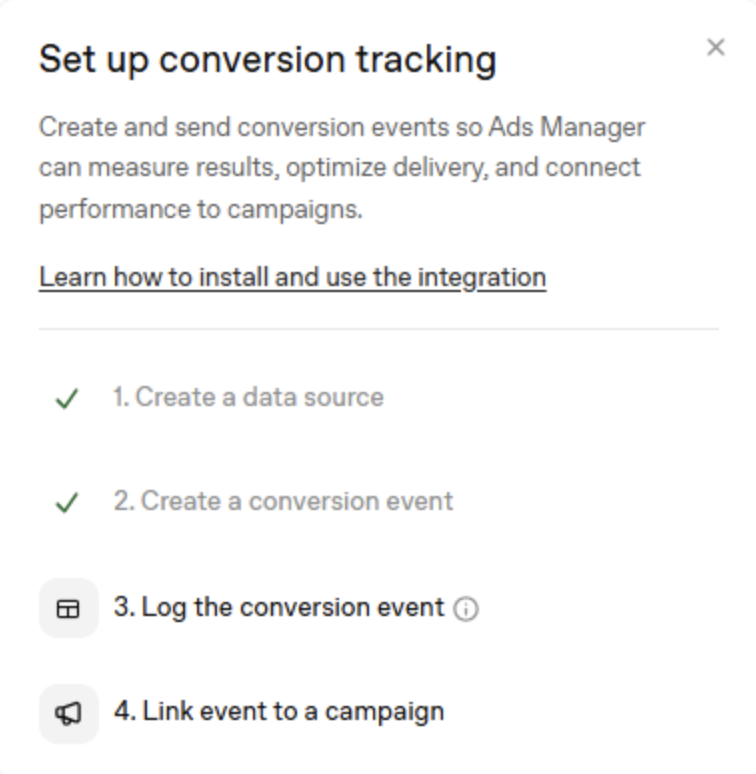
- Attribution: How will ChatGPT handle conversion tracking across devices and sessions? Will there be pixel-based tracking?
- Creative formats: Beyond text recommendations, what other formats are coming? Images? Video? Interactive elements?
- International rollout: Testing starts in the U.S. How quickly will this expand to other markets?
- How quality scoring works: Will there be a ChatGPT equivalent of Google’s Quality Score? What signals will it use?
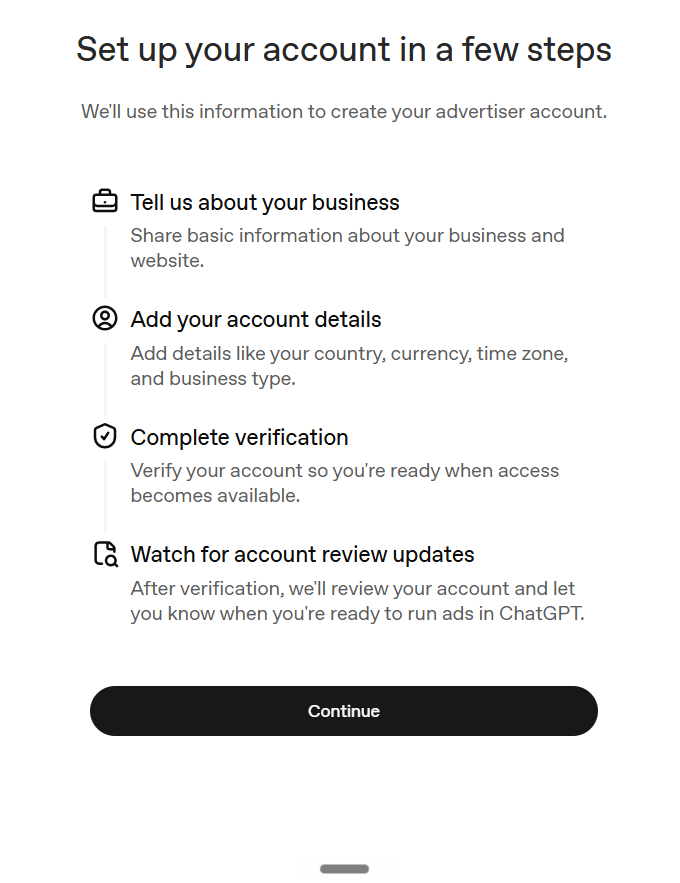
- Self-service platform: When will advertisers be able to create and manage campaigns themselves vs. working through OpenAI’s sales team?
I’ll update this post as we learn more.
So, Chat: What’s Your Next Steps?
ChatGPT advertising is real, it’s coming soon, and it represents a genuinely new channel—not just a reskin of existing ad formats.
OpenAI has 800 million weekly active users, a team of advertising veterans building the platform, and financial pressure to monetize their free tier. The incentives are aligned.
For brands that move early, there’s an opportunity to establish presence before the space gets crowded. For agencies like ours, there’s a new channel to understand, test, and optimize.
I’m Optimistic about what this means for advertisers who create genuinely useful content. OpenAI keeps emphasizing that ads need to “add value” to belong. If they hold to that standard, this could be an advertising environment where the best content wins—not just the highest bidder.
That’s the kind of platform I want to advertise on.
ChatGPT Advertising FAQ
Testing begins in the coming weeks (as of January 16, 2026) for U.S. users on the free and ChatGPT Go tiers. A broader rollout is expected throughout 2026.
ChatGPT Pro ($200/month), Plus ($20/month), Business, and Enterprise subscribers are ad-free. Users under 18 (or those predicted to be under 18 based on usage patterns) also will not see ads.
Ads will not appear near conversations about health, mental health, or politics. OpenAI has stated these are sensitive or regulated topics where ads are not eligible to appear.
OpenAI says ads will be clearly labeled and separated from the organic answer. Expect a Sponsored tag similar to what you see on Google and social platforms.
Yes. Users can turn off personalization and clear ad data. OpenAI has committed to user choice and control as a core principle.
Initial testing shows sponsored recommendations appearing after ChatGPT organic response, with the option to ask follow-up questions about the advertised product. Future formats may include search carousels and conversational display ads.
Pricing has not been announced. Based on the team OpenAI has assembled (from Google, Meta, etc.), expect auction-based bidding similar to existing platforms. Early adopters typically see lower costs due to less competition.
800+ million weekly active users as of late 2025, with 53% between ages 18–34. ChatGPT holds approximately 81% market share among AI chatbots and processes over 2.5 billion prompts daily.
ChatGPT ads are contextual to ongoing conversations, potentially interactive (users can ask follow-up questions), and not keyword-based in the traditional sense. They appear after the AI response rather than before search results.
No. OpenAI has explicitly stated they will never sell user conversations to advertisers. Ads are targeted based on the context of the current conversation, but the actual content is not shared with advertisers. Users can also turn off personalization entirely.
It is complicated. Health, mental health, and politics are listed as restricted categories where ads will not appear. However, this does not necessarily mean healthcare advertisers are banned – it means ads will not show during conversations on those topics. We are waiting for more clarity on how this affects healthcare marketing campaigns.
Conversational commerce is the ability for users to interact with ads through dialogue rather than just clicking. In ChatGPT, users may be able to ask questions like What is your return policy or Do you ship internationally directly to an advertised product. This creates a fundamentally different purchase journey where objections can be addressed in real-time.
Google is also moving into AI advertising. They already show ads in AI Overviews and AI Mode, and reports suggest Gemini chatbot ads may come in 2026 (though Google leadership has disputed specific timelines). The AI advertising space is becoming competitive across multiple platforms.
Eventually, almost certainly yes. OpenAI has hired for roles including Growth Paid Marketing Platform Engineer focused on developing campaign management tools. Industry projections suggest a self-service advertising platform could launch in 2027–2028, following the initial beta and scaled rollout phases.
Beyond standard metrics (impressions, clicks, conversions), expect new measurements around conversational engagement: How many follow-up questions did users ask about your ad? Did they click after a Q&A session? What topics did they ask about? These dialogue influence metrics do not exist on other platforms yet.
Yes. The FTC is actively investigating AI chatbot practices, and multiple states have enacted AI-specific laws taking effect in 2026. The EU AI Act (fully effective August 2026) will require AI-generated advertising to be machine-readable and explicitly labeled. OpenAI transparency commitments appear designed to meet these emerging requirements.
No, at least not yet. ChatGPT advertising is in early testing with limited inventory. I recommend adding experimental budget for ChatGPT while maintaining your core Google and Meta spend. As the platform matures and performance data becomes available, you can make informed decisions about budget reallocation.
Answer Engine Optimization (AEO) focuses on getting your content cited organically in AI responses, similar to SEO for traditional search. ChatGPT advertising is paid placement. Both work together: strong AEO improves your organic visibility, while ads give you guaranteed placement for key commercial moments. Think of it like SEO plus PPC for the AI era.
Ask yourself: Can your brand answer tough questions authentically without sounding like legal boilerplate? Do you have documented responses to common customer objections? Is your product information structured and accessible? If users could ask your ad anything, would you be confident in the response? If not, start building that conversational knowledge base now.